The Hundred-Year Chair · a chapter
Why Every Designer Does a Chair
Painters return to the self-portrait. Poets return to the sonnet. Designers return to the chair. The form is fixed and the exposure is total. The body sets the numbers within a few degrees and a few centimeters and has not changed since the Pleistocene. Gravity sets the loads. The price of failure is public, felt directly, by everyone, within seconds of sitting. A chair has no engine to carry a weak idea and no screen to distract from one. Whatever a designer believes about material, labor, money and other people becomes visible at the scale of an object you can lift with one hand. The canon of modern design is, to a first approximation, a canon of chairs.
In the first week of this project I found a chair of four flat colored panels and sent it to my son, identified as being by the designer Donald Judd. It was Verner Panton's Vilbert of 1993, and I had built a version of it before I knew that (the chapter The Chair I Met in Paris tells the story). The mistake was possible because Judd and Panton, who agreed on almost nothing, had both arrived at a chair made of plywood panels meeting at an angle.
I ask two questions of every chair in this chapter. The first is about structure: how does the sitter's weight get down to the floor? Through a frame, a shell, a folded plank, a truss? The second is the question this book is built around: if you wanted to make another one, what would you need to have and know? For some chairs the answer is a drawing. For others it is a factory, or a mold, or a written specification, or a particular person's hands and judgment. That is what I mean by where the design lives. Judd's Chair 84 and Panton's Vilbert answer both questions the same way. Flat panels carry the load through their seams, and a drawing and a saw will build either one.
The players
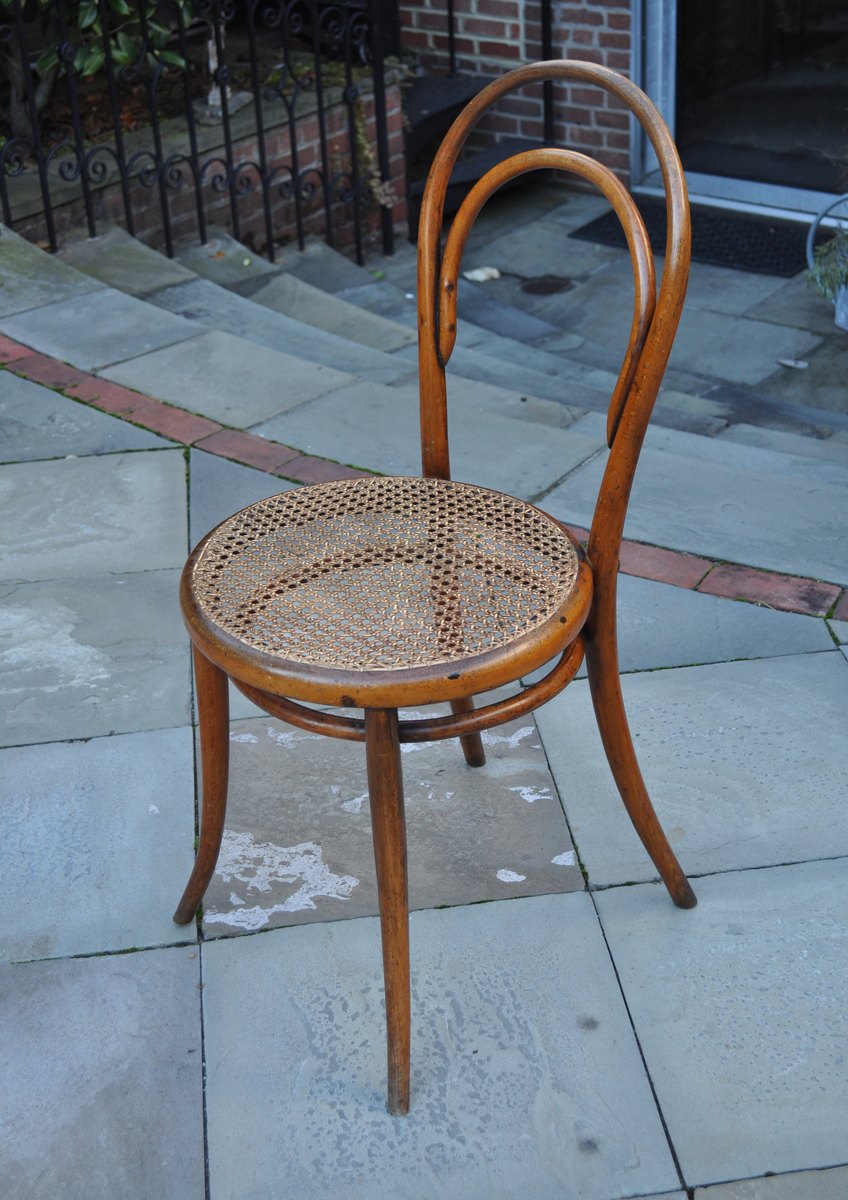
MICHAEL THONET answered the second question with a factory. The No. 14 of 1859 is six pieces of steam-bent beechwood, ten screws, and two nuts. Thonet steamed beech slats, pressed them into iron molds and dried them. The parts shipped flat and were put together at the destination by whoever was there. Gebrüder Thonet is credited with fifty million No. 14s between 1859 and 1930. The design lives in the process: the steaming, the forms, the drying rooms. The chair itself is almost a byproduct: not a cheap chair, a repeatable one.
GERRIT RIETVELD answered three times. The Red and Blue chair of about 1918 is a manifesto: sticks overlapping in space, every joint displayed, comfort conceded to argument. The Zig-Zag of the early 1930s deletes the back legs and asks a plank to do the work of a frame. The plank manages it at two folded corners, each joined so that it cannot open, and I come back to them. And the Krat, the crate chair of 1934, is the ancestor this project claims most directly: a kit in packing-crate pine, drawn so that a competent amateur could make it. The design lives in the drawing, not the object. The chapter The Chair I Met in Paris tells how I came to it. Rietveld also made the Beugelstoel of 1927, which splits the two questions cleanly in half: a bent steel hoop answers structure, a plywood shell answers the body. One designer, four load paths, and the same conviction under all of them: a chair is an argument anyone should be able to afford and, ideally, to build.
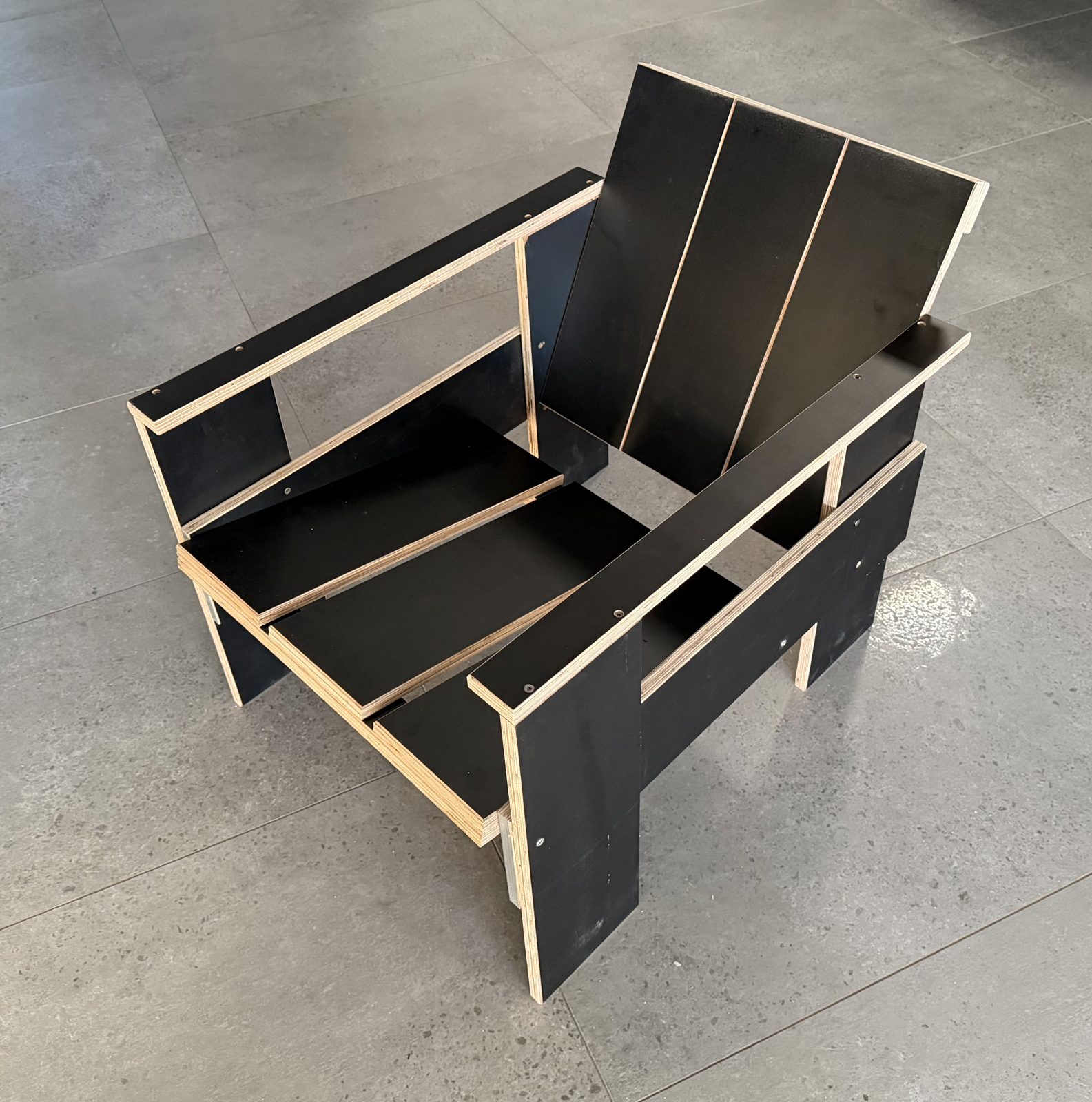
A chair needs a few angles: the seat tilts back a little, the back leans. Rietveld got his without cutting a single angled piece. Every cut in the crate chair is square, and the tilt of the seat and the lean of the back come from which boards are wider and where the cross pieces are screwed on. The first chair I drew for this project, a dining chair, got the same angles a different way: three cuts with the saw blade tilted. Same result, two methods. Which one you use depends on what you have. If you have boards and a screwdriver, you get your angles from placement. If you have a saw that tilts, you get them from cuts. Every chair in this chapter made that choice somewhere.
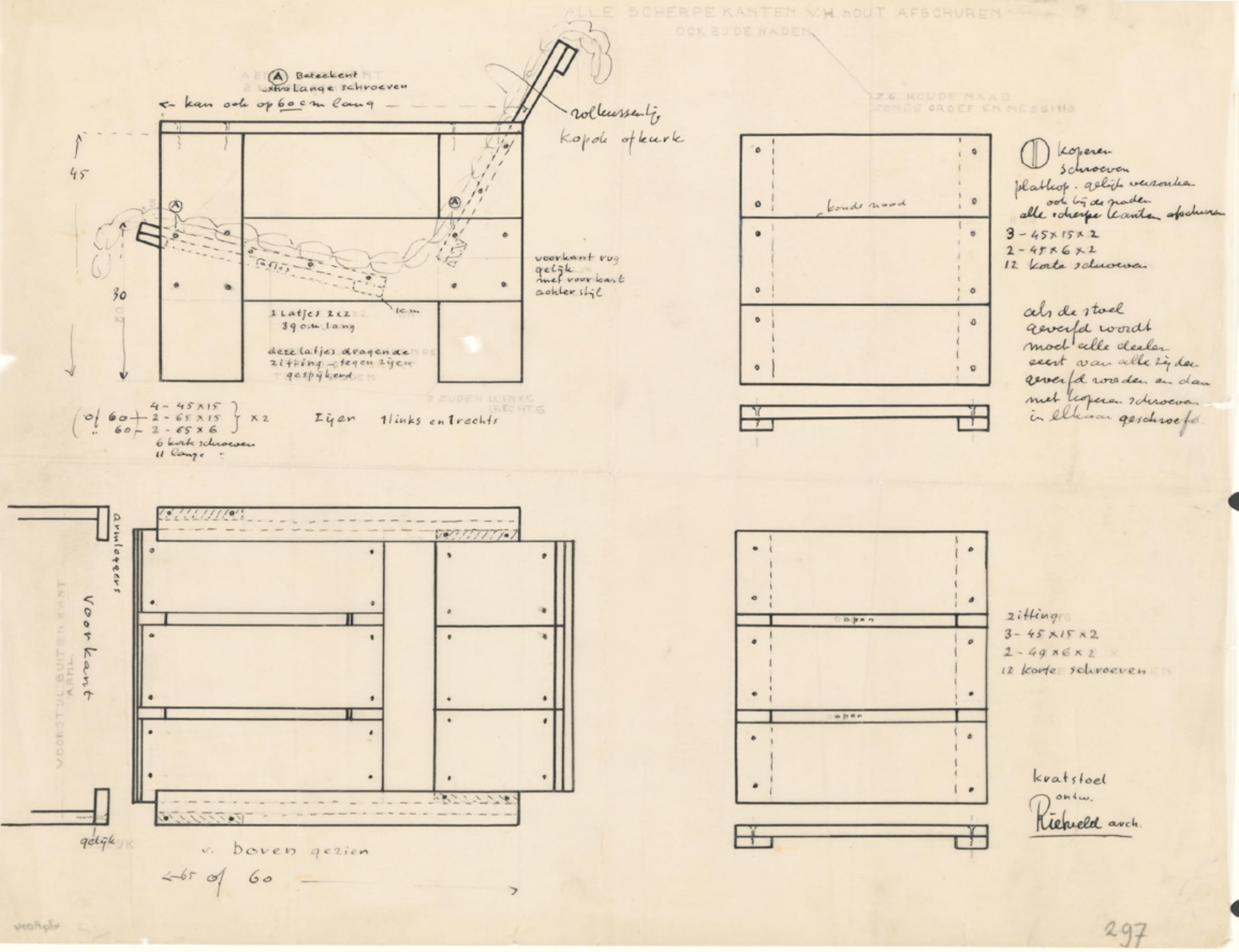
Rietveld sold the crate chair cheap on purpose; nothing in the sheet suggests he expected it to be kept. Ninety-two years later the originals are in museums and a licensed lounge version sells for five hundred dollars. The permanence was manufactured afterward, by scarcity and licensing, out of an object built to be temporary. He predicted the physics correctly and the culture incorrectly.
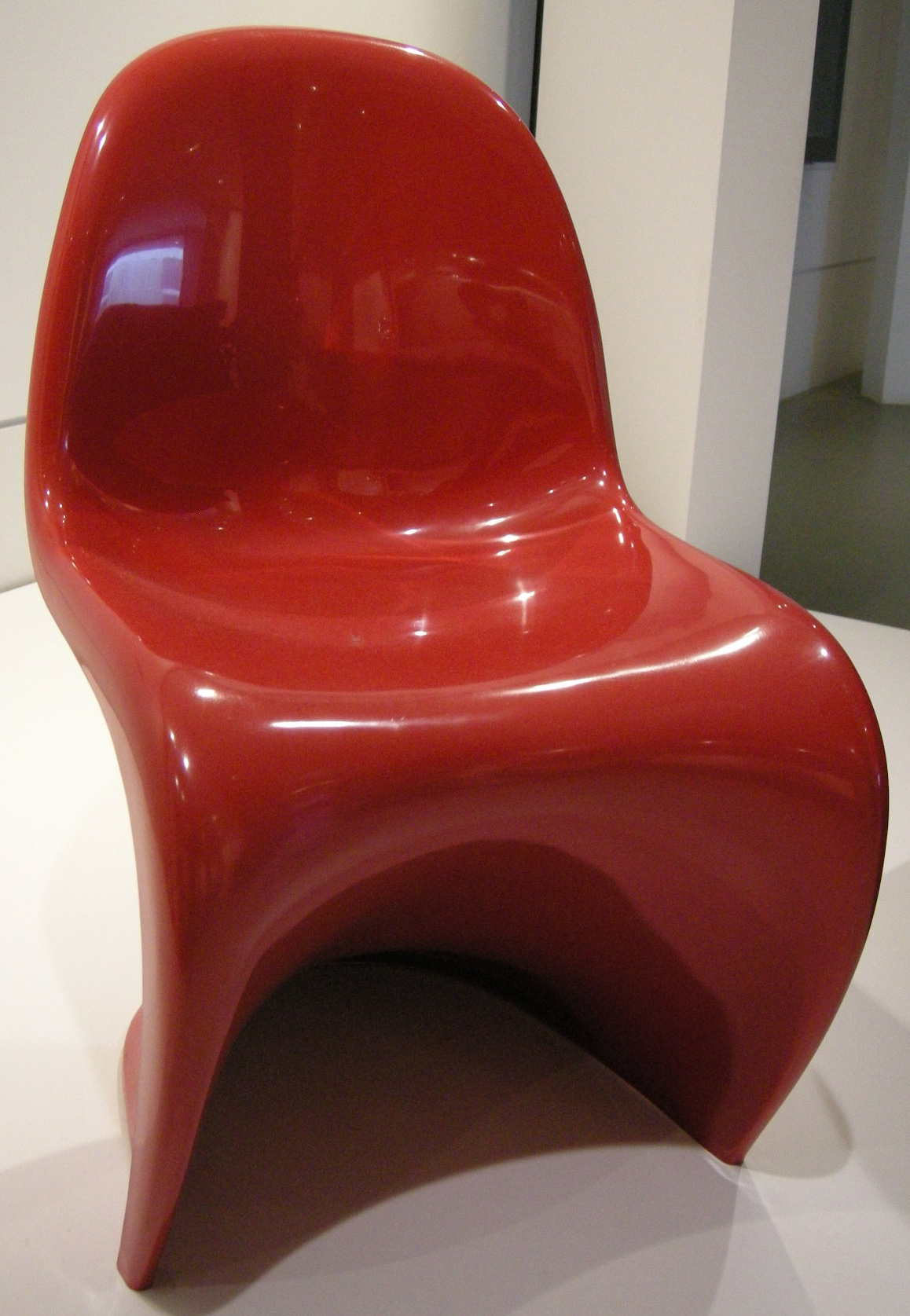
VERNER PANTON answered twice, thirty years apart. The Panton chair, developed with Vitra and presented in 1967, is one piece of molded plastic: seat, back and base in a single S-shaped curve, no joints anywhere. It has no back legs, the trick Rietveld had pulled off in wood with the Zig-Zag, but Panton did it in one continuous piece, which took a decade of new plastics to make possible. The structure question has no answer here because there are no parts to carry the load from one to the next; the whole chair is one part. The design lives entirely in the mold.
Then in 1993 the same designer shipped the Vilbert through Ikea: four flat MDF panels and screws, angles and attitude, a plank chair for flat-pack retail, and, hidden inside the pinwheel where the four panels meet, two identical MDF gusset panels with inserts for the fasteners. I did not know about the gussets when I built mine. The man who spent the sixties escaping flat panels spent a late season returning to them. I began this project inside Panton's second answer, believing it was Judd's.
![The Vilbert read in side view, the project's geometry laid over it: the panel seams carry the load, and the two gussets that stiffen the pinwheel are hidden inside it, invisible from here. [Vilbert photograph rights are a standing gate; clear before print.]](book/images/vilbert-fit-overlay.jpg)
DONALD JUDD, whom I now know only from his own writing, answered with an argument. "A work of art exists as itself; a chair exists as a chair itself," he wrote in the 1993 essay "It's Hard to Find a Good Lamp," and his furniture holds that line with complete seriousness. The Chair 84 family, in one-by-twelve pine and later in plywood, is a small fixed grammar: boards meeting at right angles, proportion doing all the visual work, stiffness arriving through panel shear the way it does in the Vilbert, though Judd would not have enjoyed the comparison. Anyone with the dimensions and a saw can build a Chair 84. What Judd supplied was the argument: the essay says why the dimensions are those, and the authorized pieces are made to them today, stamped and numbered. Comfort is subordinated to rightness, and Judd said so without apology, in the two sentences the chapter Ten Thousand Years of Sitting also quotes: "A straight chair is best for eating or writing. The third position is standing." Judd's chairs survive in museums and collections, wanted for the case they make as much as for sitting in. That is a valid thousand-year plan, just not the domestic one this book bets on.
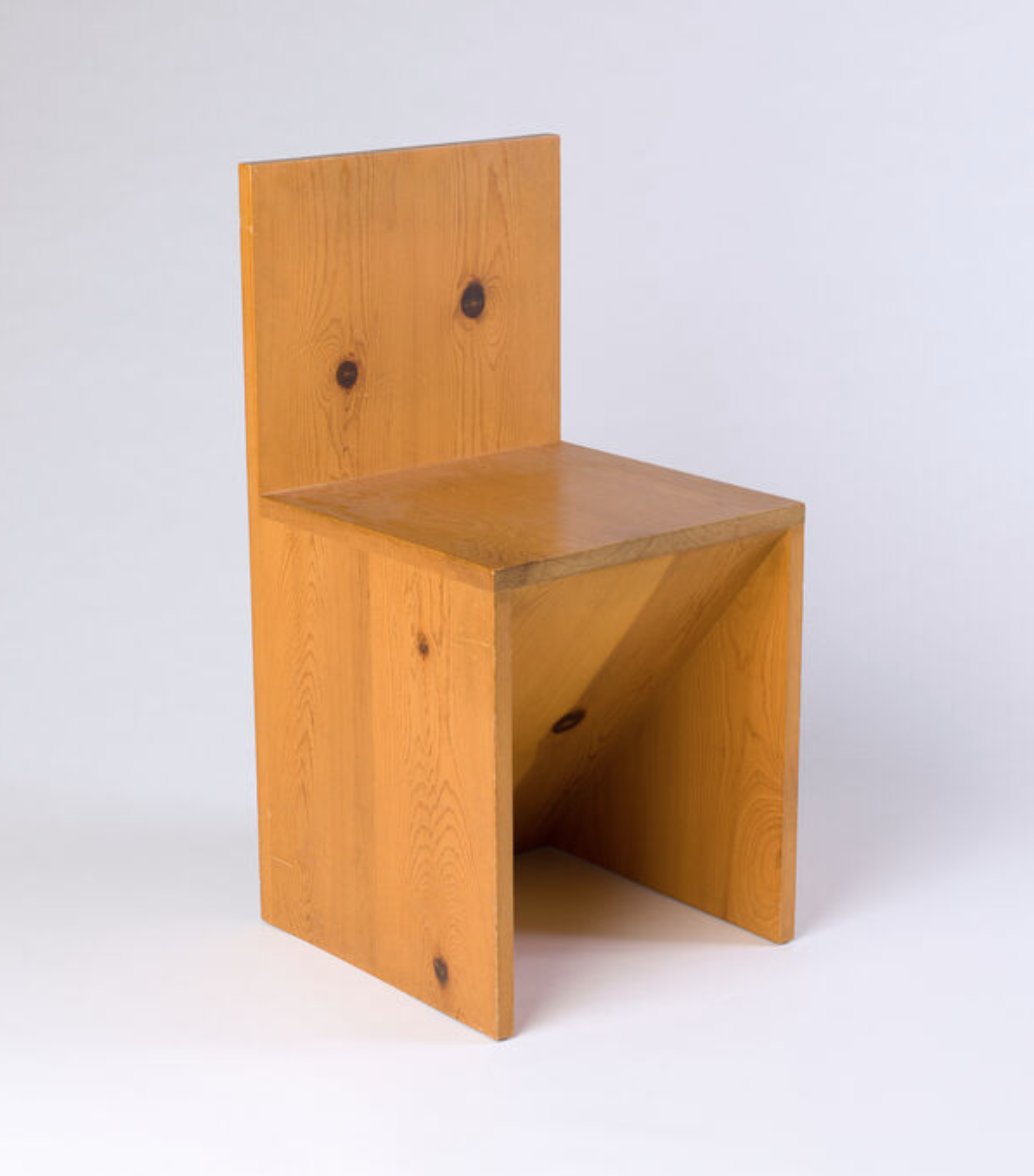
PHILIPPE STARCK answered with a joke. The Louis Ghost of 2002 is a Louis XVI armchair rerun as a single polycarbonate injection molding, the ancien régime made stackable and washable and cheap enough for a café terrace. It is reported to be among the best-selling designer chairs in the world, in the millions. The design lives in the reference and the mold at once: the historical silhouette carries the meaning, the polymer carries the sitter, and the joke carries the sale. Of everything in this chapter, the Louis Ghost carries the most meaning in the least matter.
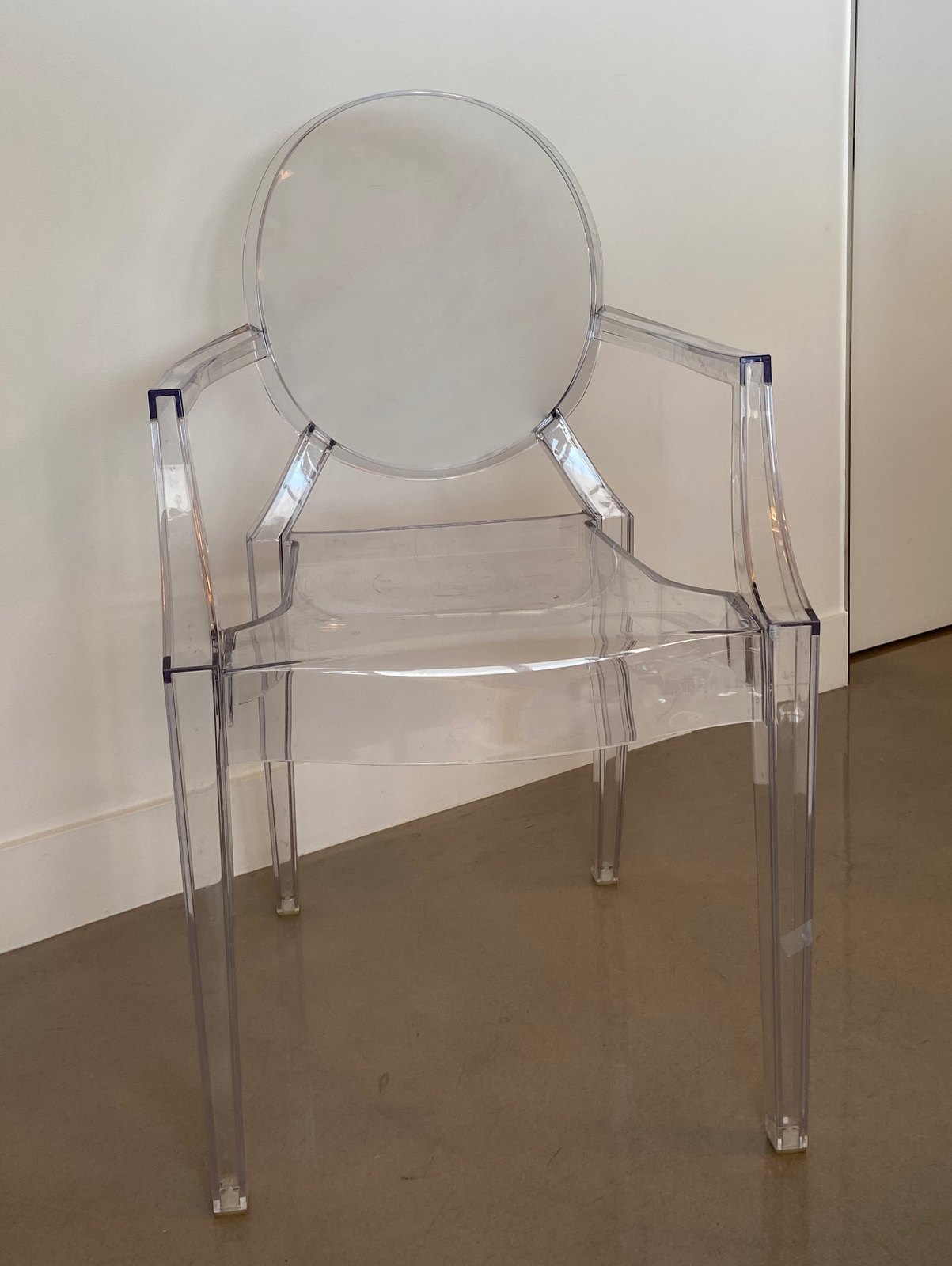
PIET HEIN EEK answered by inverting the ledger. His scrap-wood furniture, begun with the scrap-wood cupboard of his 1990 Design Academy Eindhoven graduation, prices the material at nearly nothing and the labor at its true cost, the exact reverse of industrial furniture economics. Every piece is different because the stock is different; the design lives in the making, in the judgment applied board by board. His example made building a chair out of MakerStock's scrap a design move rather than a cost saving. His work also carries the caution: salvage is only cheap if your time is free.
![Piet Hein Eek's scrap-wood chair: every board different, the material near free and the labor at its true cost, the industrial ledger run backward. Image: pietheineek.nl [confirm exact product name and rights before print].](book/images/pietheineek.nl-oak-chair-scrap.jpg)
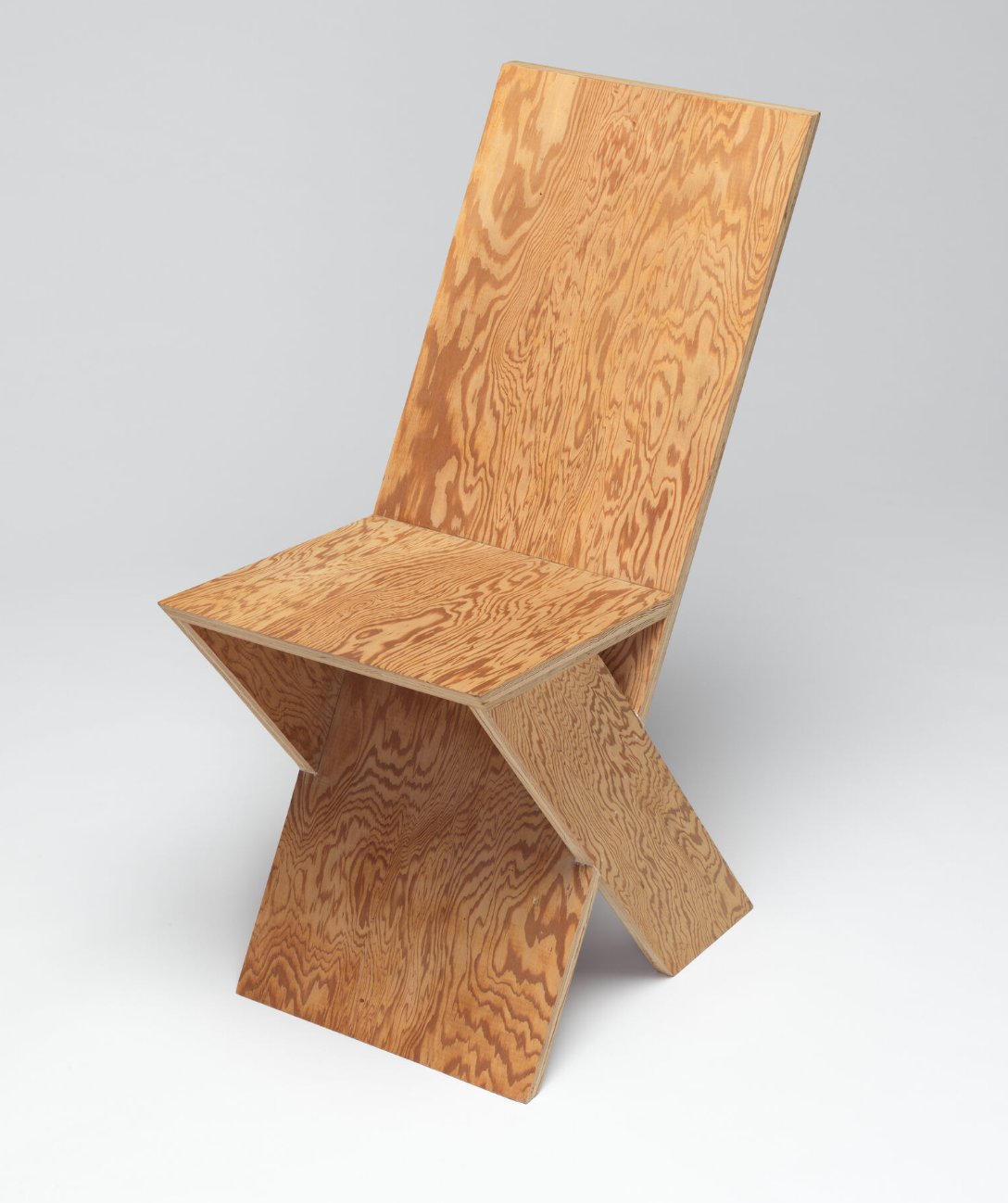
MICHAEL BOYD answered as a scholar. The Plank sidechair, model P1201, designed 2011 and fabricated 2012 in Douglas fir, entered SFMOMA's collection the year it was made. Boyd is a designer who is also one of the serious collectors of modernist design. The Plank is a considered reenactment of the Zig-Zag question in solid softwood, made in small numbers under his PLANEfurniture label. It reads as a Judd from memory: the plank canon is now dense enough that a newcomer's eye slides from any one plank chair to the most famous name nearby, which is the misreading I committed for a week. Like Judd's, Boyd's chairs survive by being collected.
Sittable, with back flips
Now the first question. Several of these chairs have perfectly humane geometry, the seat and back angles in or near the dining band. They reach it through structural acrobatics. The Zig-Zag's sitter is carried around two right-angle detours: the load enters a cantilevered seat plank, turns a corner into a diagonal, turns again at the floor. Every corner is a moment joint, dovetailed, wedged, and glued into pretending to be rigid. The Vilbert's sitter is carried by flat panels meeting in screwed butt joints, a moment frame with no diagonal in sight. My first instinct was to add one. The version I built flexed exactly where a moment frame flexes. The Panton chair makes the same silhouette work by becoming a single molded spring. The Boyd Plank accepts the geometry the fold dictates, and its seat rakes back past the dining band because the folded corner under it puts it there.
The chair I built in the first week felt faintly spongy, and the sponginess was not at the hub. Both versions have a gusset there, Ikea's as two plates, mine as a 3D printed cell, and it does its job. The flex is further out. Four panels cantilever from that hub, and under a sitter they spread eagle, each one bending along its own length where no diagonal reaches. A gusset stiffens a corner. It cannot stiffen a cantilever. I would expect to find the same deflection in the Vilbert itself, for the same reason, and I would expect it in any four-panel cell built this way.
Sorted by load path, the chairs in this chapter fall into seven kinds: a bent and braced frame (the Thonet); an exhibited stick frame (Red and Blue); folded plates (Zig-Zag, Plank); panel moment frames (Krat, Vilbert, Judd's 84, and the NILOHOUSE plank chair from the family text thread of the first week); a monocoque (Panton, Louis Ghost); a hoop frame with a riding shell (Beugel); and a truss (the Keel Chair, where the frame solve shows one tension member and everything else in compression). The folded and panel chairs are sittable in spite of their structure, by heroism at the joints. The truss is sittable because of its structure, with geometry and comfort solved as one problem. TN-9 states the sharp version: the keel fixes the whole structure and leaves three numbers free, and all three of them are comfort numbers.
The Fan, with ancestors
The Fan in the chapter Ten Thousand Years of Sitting already carries five of this chapter's chairs. The Keel Chair is there by construction, at 100 degrees seat to back. The Vilbert sits at 100.6, within a degree of it. The Krat opens to about 113; Rietveld drew a lounge chair. The Judd is at 90 and the Red and Blue at 117. The Thonet, the Louis Ghost, the Zig-Zag and the Plank are not on the Fan yet. Written down on 6 September 2026: I expect the first two in the dining band, the last two past it, where their folds put them.
Where the design lives
Line the answers up. Thonet put the design in the process; Rietveld put it in the drawing; Judd put it in the argument; Panton and Starck put it in the mold; Eek put it in the making; Boyd put it in the collection. My answer is to put the design in a part. That part is the keel, the one member that carries every dimension the chair needs, structure and datum and drawing at once, so that the information and the atoms travel together and either can renew the other. I arrived at it in a shop in August, after the Vilbert taught me what a panel frame cannot do, and I argue it in TN-9. The next hundred years grade that answer.
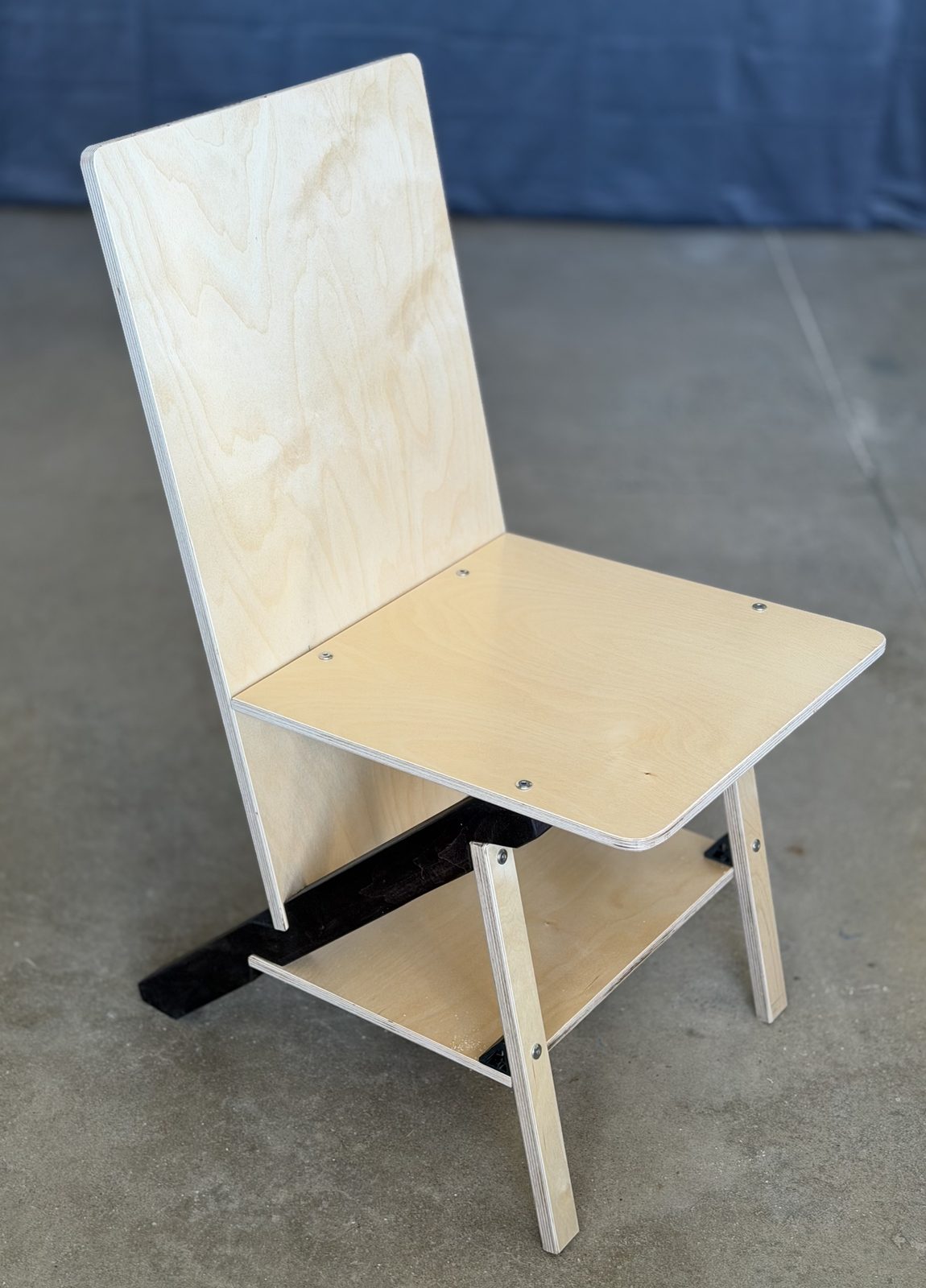
Every designer in this chapter did a chair because it is the one object that will not let you lie to yourself for long. It let me lie for about a week.
Canon, verified 18 Aug 2026 (carried from the prior draft): Thonet No. 14 construction and dates against the standard accounts (six bent parts, ten screws, two nuts; 1859; the fifty million figure repeated there is queued for a scholarly source); Boyd Plank P1201 against the SFMOMA object record (designed 2011, fabricated 2012, Douglas fir, gift of the designer). Judd's two quotations were checked verbatim on 6 Sep 2026 against the Judd Foundation's published text of "It's Hard to Find a Good Lamp" (1993). The crate chair's core facts (1934, packing-crate pine, sold through Metz and Co from 1935 as a kit) are the ones verified for the chapter The Chair I Met in Paris against the institute that keeps Rietveld's papers and the museums that hold the chair; the five-hundred-dollar licensed lounge version is the price I quoted to my family on 30 July 2026. The Vilbert's gussets are this project's finding of 13 August 2026, a bench model's prediction confirmed by a dealer's photograph and read off it in full that night. The two-currencies reading of the crate is from the project's tape of 29 July 2026; the manufactured-timelessness reading from 31 July. My own misfiling of the Vilbert, and the panel chair I built from it, are told with their evidence in the chapter The Chair I Met in Paris and the next act.
Photographs. The project's own photographs were processed 21 Aug 2026 from the HEIC originals: oriented, GPS and camera metadata stripped, and saved as web derivatives (long edge 1600, quality 82) named by capture date. Placed here: 2026-07-30-crate-black-lounge and 2026-08-03-chair-with-model, captions verified against the images. Exemplar figures placed from the existing set: rietveld-1934-drawing-extract (crop and rights to confirm), vilbert-fit-overlay (Vilbert photograph rights are a standing gate), pietheineek.nl-oak-chair-scrap (product name and rights to confirm). Thonet, Panton chair, Judd, Starck, and Boyd are FPO pending the ten-object-plate image-rights clearance.
Exemplar frames still awaiting an open license say so; the cleared exemplars (Thonet, Panton, Louis Ghost) and their per-image credits live in plate/credits.md. Project photographs by Karl T. Ulrich.
A chapter of The Hundred-Year Chair, drafted and refined in public. The same text lives in the book; the interactive tools and the fully-sourced technical notes live here. home · the book · the technical notes · hundredyearchair.com