The Hundred-Year Chair · a chapter
The Chair I Met in Paris
On the twenty-seventh of May, 2019, in the late afternoon, I came around a corner in the Bon Marché, the department store on the Left Bank, into a display of furniture by Piet Hein Eek. Eek builds from salvaged wood. His pieces are made of mismatched scraps of old painted timber laid side by side, every plank a different color and age, the seams left showing. I had known the work from photographs but had never stood next to it. There was a placard on a dining table of the same reclaimed boards, and I photographed the placard, the chairs, and a bench. Those photographs on my phone are how I know the date.
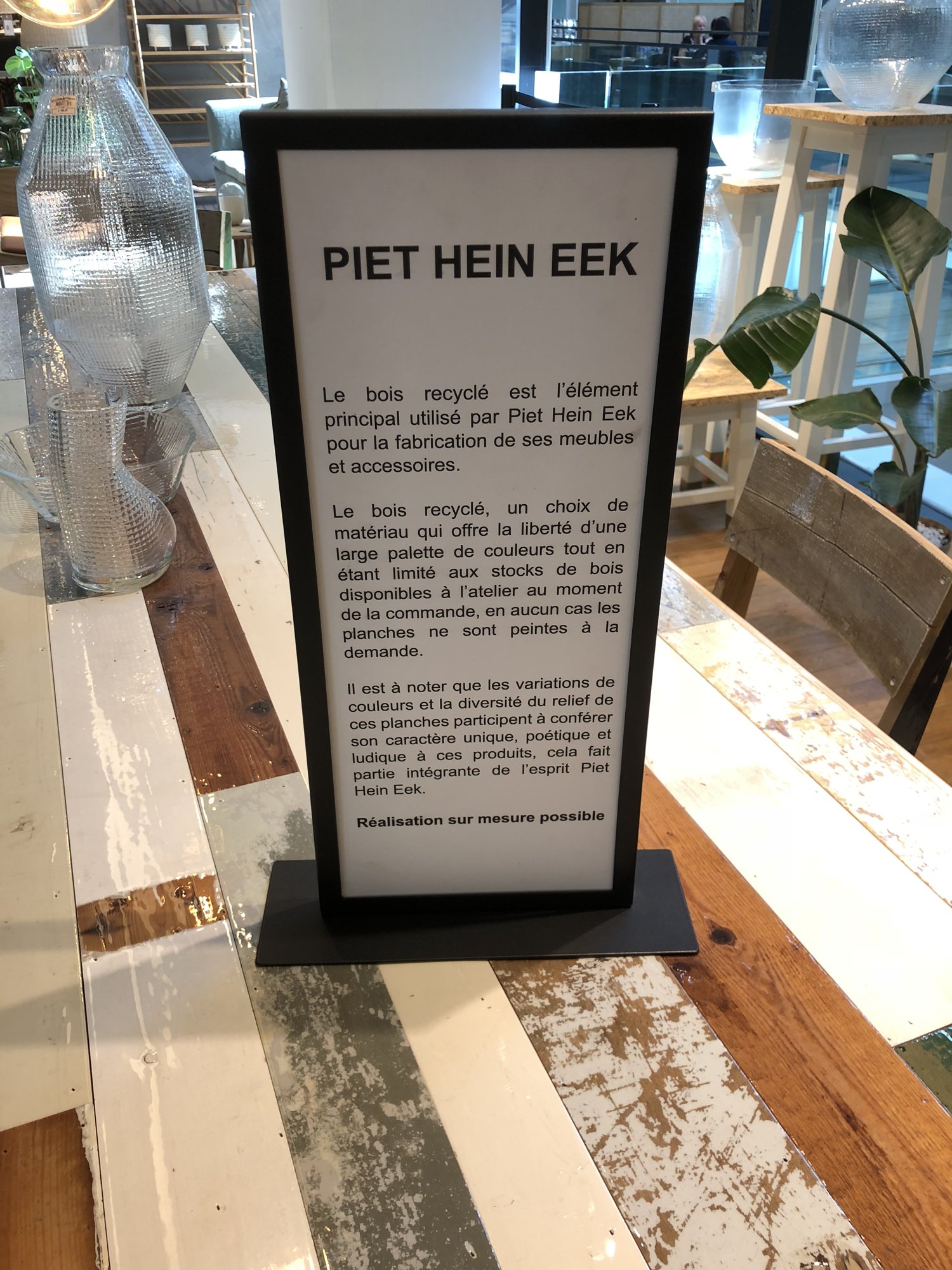
What struck me? A piece of furniture does not have to hide what it is made of to be worth wanting. Salvage can be an attractive feature. The making can be read straight off the object, the dimensions of the boards sitting on the surface, the joints obvious, the selection of a slotted head flat head screw all in plain sight. Most of what we buy is built to hide all three. We are usually paying for the hiding.
I filed this encounter away with many similar encounters in my photo reel with the thought that I wanted to design something with these values someday myself.
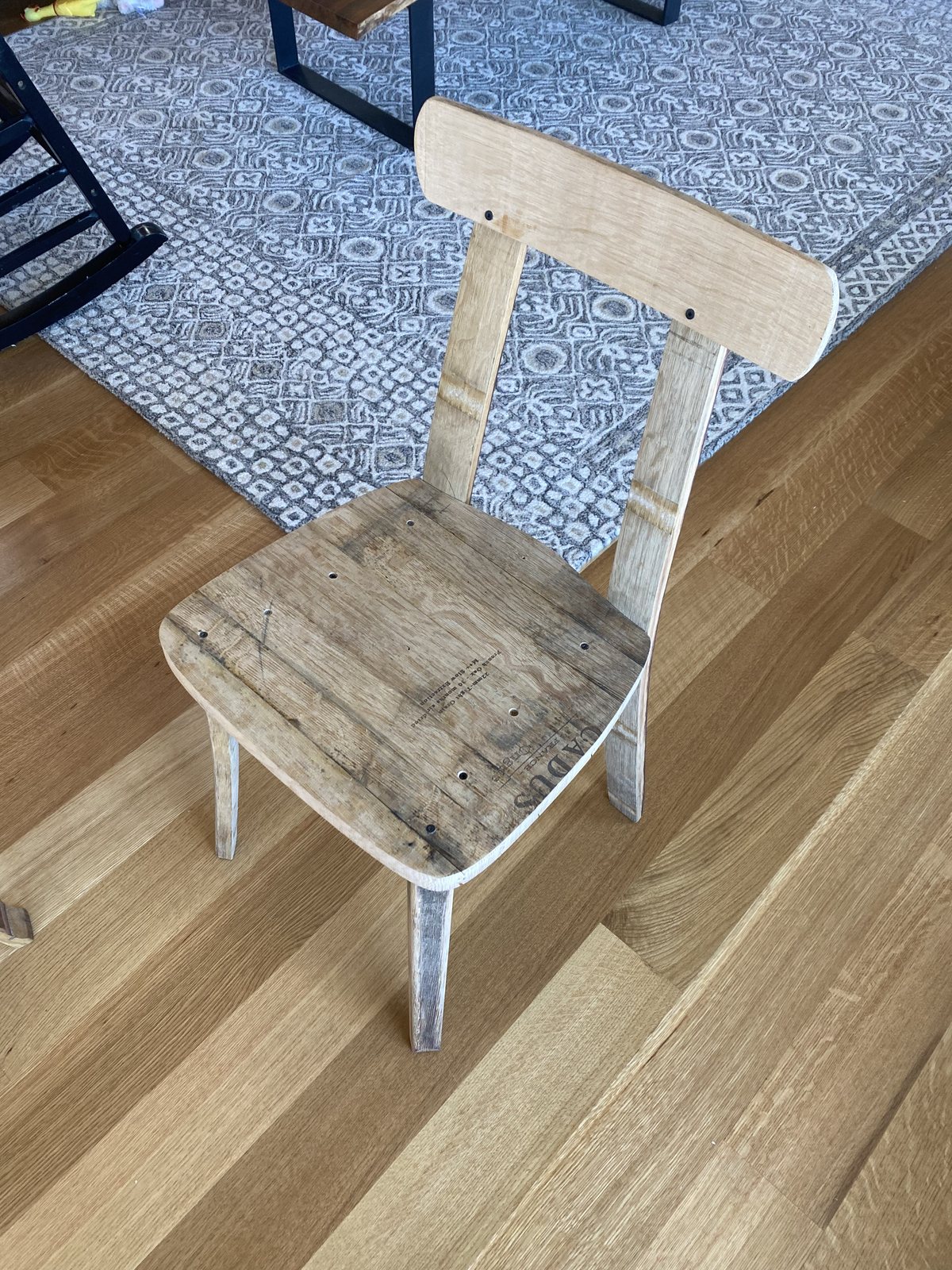
I have never been short of things I want to make. This particular opportunity did not become a priority for seven years. Once in those years I poked at it. During the pandemic, when holed up at a ranch in Napa wine country, I made two small tables and a chair from wine-barrel staves, where the French oak was fabulous and the chair was not.
My intrinsic interest in the project did not change between 2019 and 2026, but a nudge of urgency and the availability of a rare resource came together to get me moving again.
The urgency came from a business I co-founded called MakerStock, which supplies materials to people who build things; primarily panels and sheet goods cut to the sizes customers need. Any business that cuts sheet goods into smaller pieces generates offcuts, about five percent in our case. Cutting panels to size often leaves relatively narrow pieces, less than the 12 inches that tends to be our smallest stock size. The pile just keeps growing.
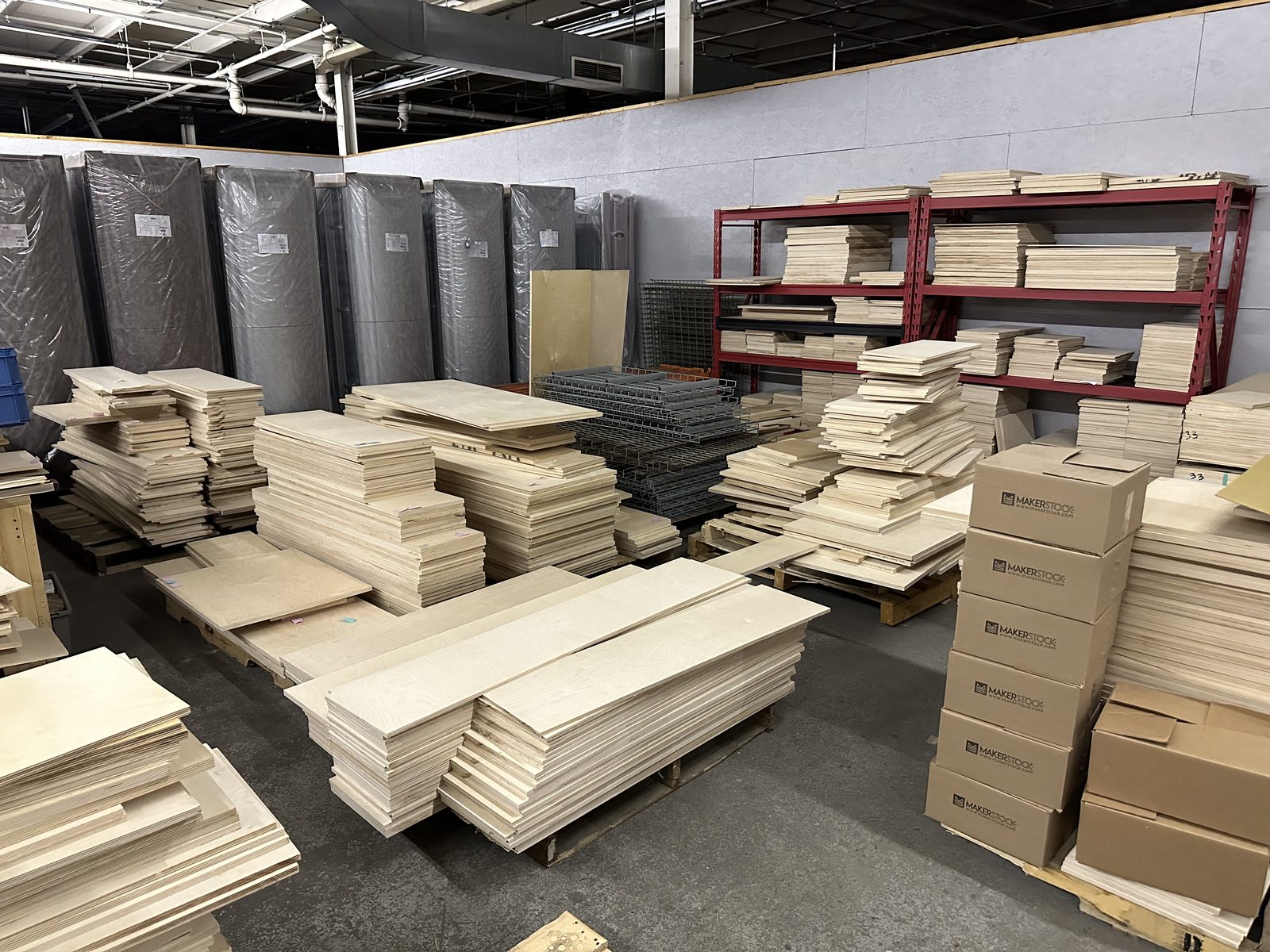
We have tried giving the pile away and it refilled. We have tried selling it cheap by the pound, and it dribbles out the door a few pieces at a time. We even have a program we call "Cut the Scrap" in which we just stow scrap in any shipment that has some extra room in the carton. Every scheme the business came up with was a way of disposing of the pile, never a way of using it. What would it take to design a chair that actually preferred narrow stock?
Motive is not quite enough. I also needed some time to think, design, and build. In July 2026 I was in my part-time home in Queensland, Australia for northern-hemisphere summer break, which puts my university, my company, and nearly everyone who needs something from me fourteen time zones away. My work day occurs while everyone I work with is watching Netflix or asleep. When in Australia I settle into a routine of uninterrupted deep work from about 5am to Noon, some lunch, an afternoon of making (or repairing what is the oldest house on our block), a walk on the beach, and a relaxing dinner and evening at home. Tough life.
Motive and time had both been in place for a couple of weeks, so something else had to tip me into action. The morning of Friday the twenty-fourth of July went to a paper about telling skill from luck: standard deviations, effective sample sizes, the tick labels on a plot that were rendering badly. At twenty-five to nine I was still fighting the file organization of a statistics manuscript. At five past Noon I began typing a message that opened, "I've starting thinking about a new project, now called 'chair project'" pointing to an empty folder on my laptop file system.
Three and a half hours sit between those two moments with nothing on the record. From my email sent folder I see that I had just finished that pesky statistics paper and sent it for comment to two of my Wharton School colleagues at around 9am. Looking back at my phone, I have a single photo of a papaya tree in the yard for that morning taken at 10:40am, and I remember asking ChatGPT how to tell when a papaya is ripe (just before the ants and birds move in, I recall). My best guess is that I ate an early lunch (I'm an early riser, so that's not uncommon) and I was at a natural break in my work flow. I had finished something so obviously academic and aligned with my day job that I gave myself permission to mess around with a chair.
For sources, citations, and the technical notes behind this chapter, see hundredyearchair.com.
A chapter of The Hundred-Year Chair, drafted and refined in public. The same text lives in the book; the interactive tools and the fully-sourced technical notes live here. home · the book · the technical notes · hundredyearchair.com